From September 9 to 11, 2026, CIOE China International Optoelectronic Exposition took place in Shenzhen. The show covered 320,000 square meters and welcomed more than 240,000 professional visitors. CIOE has served the photonics industry for 27 years and is a UFI-approved global photonics exhibition. LEMON Photonics exhibited its independently developed VCSEL, HCSEL and EEL laser chips, along with a full series of point, line and area laser modules.
During the three-day event, the LEMON Photonics booth stayed busy. Experts from LiDAR, robotics, consumer electronics, industrial inspection and industrial processing visited in turn. They discussed chip parameters, module integration and mass production delivery on site. Many visitors stopped at the 2D flip-chip VCSEL and addressable speckle module displays, asking about addressable zones, chip design and custom speckle patterns.

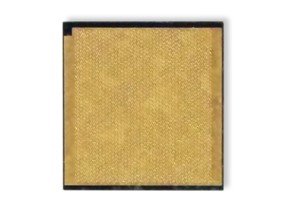
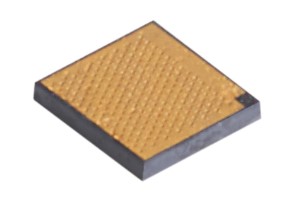
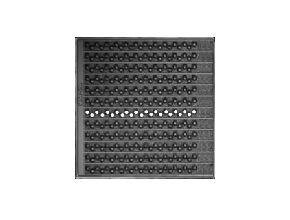
The 2D flip-chip VCSEL chip, including 8x8 and 32x32 zone standard products, is a new generation product from LEMON Photonics for solid-state LiDAR. Traditional top-emitting VCSEL chips are limited by electrode blockage and heat dissipation paths, so performance can be constrained in high-power-density scenarios. The flip-chip structure places the active region directly toward the package substrate, significantly reducing thermal resistance. The chip can maintain stable output over a wider temperature range. The substrate side also becomes the light-emitting surface, allowing micro-lenses to be integrated directly at wafer level. This compresses beam divergence and reduces assembly difficulty and overall thickness for downstream optical modules. 2D addressability means each VCSEL unit in the array can be driven independently. With zone-based detection and electronic scanning, point cloud collection across the field of view can be completed without mechanical scanning parts. This gives solid-state LiDAR a more compact and reliable light source option.

The addressable speckle module is another key product from LEMON Photonics for 3D vision and robot navigation. The module uses a self-developed multi-junction addressable VCSEL chip as the core emitter, together with a multi-channel collimation optical system and a custom DOE speckle generator. It can project high-density random speckle patterns with tens of thousands of points. Compared with traditional Flash speckle solutions, the addressable architecture supports on-demand lighting. Areas that do not need illumination do not consume power, making a clear power consumption difference for battery-powered mobile devices. The module currently supports 16×1, 12×1, 9×1, 4x4 and 2x2 zone options. Its wavelength covers 940 nm, single-channel peak power can reach above 30 W, and electro-optical conversion efficiency can reach up to 56%. In application, the module is suitable for autonomous driving blind-spot LiDAR, AGV and lawn mower robot navigation, industrial 3D profile scanning and consumer electronics facial recognition.

At CIOE this year, LiDAR and 3D sensing remained core topics in the intelligent sensing exhibition area. As a key light source option for solid-state LiDAR and 3D sensing modules, VCSEL continues to draw strong market attention. LEMON Photonics now holds more than 120 authorized patents, has a monthly capacity of over 4,000 6-inch wafers, and has shipped more than 100 million laser chips in total. As a laser chip and light source solution provider, LEMON Photonics continues to deepen its laser chip technology route. It has built full-chain capabilities from chip design, epitaxial growth and wafer processing to packaging, testing and module integration.
LEMON Photonics will continue to increase investment in chip R&D, improve its laser module and solution matrix, and work with industry partners to bring laser chips, intelligent sensing light sources and industrial heating systems into more large-scale application scenarios.